As you start setting your sights on longer rides or overnighters, you'll likely be figuring out how to carry gear on your bike.
Dialing in your setup is part of the fun, but choosing the right bike rack and carrier system isn’t always straightforward. The wrong setup can affect your bike's functionality, create unnecessary hassle, and can lead to issues when you're miles from anywhere.
So before you commit, here are five common mistakes to avoid when choosing a bike rack and carrier system for your MTB or eMTB (and what to look for instead):

1. Overlooking installation and adjustability.
A lot of racks still rely on inbuilt mounts or awkward axle setups – which many MTBs and eMTBs simply don’t have. The result? A frustrating install or a rack that never quite feels secure. If installing or removing your rack is a hassle, you’re less likely to use it.
Simple, secure mounting – like a quick-release system – makes it easy to attach or remove your rack depending on the ride ahead.

2. Not accounting for full suspension and frame design.
Many racks that attach to the seat post are designed with rigid frames or hard tails in mind and don’t accommodate for full use of suspension. On smaller frames, this challenge is compounded: reduced clearance and tighter geometry make it difficult to position a rack without the saddle or tyre making contact.
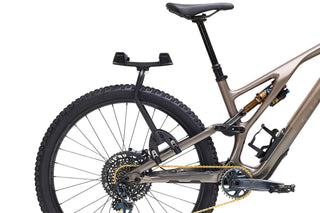
Instead, opt for a rack designed specifically for MTB’s and eMTB’s - one with no attachment to the seat post and allows you to mount and adjust in a position that suits your suspension clearance and frame size.

3. Losing dropper post functionality.
Your dropper post is essential on the trails – so the last thing you want is a rack that gets in the way of using it.
Seatpost-mounted racks clamp directly onto the post, which can restrict travel, affect performance, and increase wear over time. Add a bit of weight and rough terrain into the mix and they're prone to swaying, making them less suitable for trail riding.
Avoid systems that attach to the seatpost, and instead choose a design that allows full dropper use with zero interference.

4. Underestimating how tough MTB riding is on gear.
Trail riding puts stress on your setup – bumps, vibrations, and rough terrain can quickly expose weak materials. A rack built with high-quality, durable materials will hold up ride after ride, no matter what you throw at it.
Look out for racks that are ISO 11243 certified – meaning they’ve undergone testing to meet safety, strength, and durability standards.

5. Choosing a rack that may damage your bike.
Poorly designed systems can rub against paint, put pressure on the wrong points, or shift under load – especially on rough trails. Over time, that can lead to scratches, wear, or even structural damage.
Look for a rack with secure, well-designed mounting points and frame-friendly contact areas, so your bike stays protected no matter how hard you ride.

At the end of the day, a bike rack and carrier system should enhance your ride, not hold it back – giving you the freedom to carry more, ride further, and adventure harder, all without compromising your MTB / eMTB or how you ride.
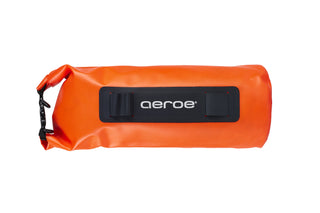
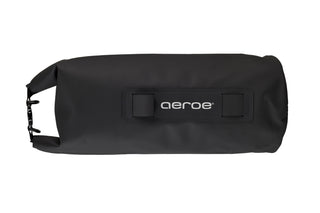
The aeroe system was designed and engineered with all of the above in mind.
- Quick release for fast fitting & removal, no need for inbuilt mounts or fiddly axle mounting.
- Fits small and full suspension frames including full use of dropper post with zero attachments to the seat post.
- Made from high quality materials that are built to last. ISO 11243 certified – meaning they’ve undergone testing to meet safety, strength, and durability standards.
- Silicon-coated nylon at all touch points to protect your bike.
Ready to take your MTB or eMTB adventures to the next level? Check out our Spider Rear Rack – the world's most user friendly bike rack and carrier system.